
What Are the Three Types of Dredges?
2025-11-04What equipment do you use to dredge?
2025-11-10If you visit a busy port or see a new beach being built, you might not think about what’s happening under the water. But below the surface, a lot of work is going on. This work is called maritime dredging. It keeps ports deep enough for ships, makes new land, and even protects coasts from erosion.
In this guide, we’ll explain what dredging is, how it works, what tools it needs, and how to choose the right dredge hose to make your project safe and efficient.
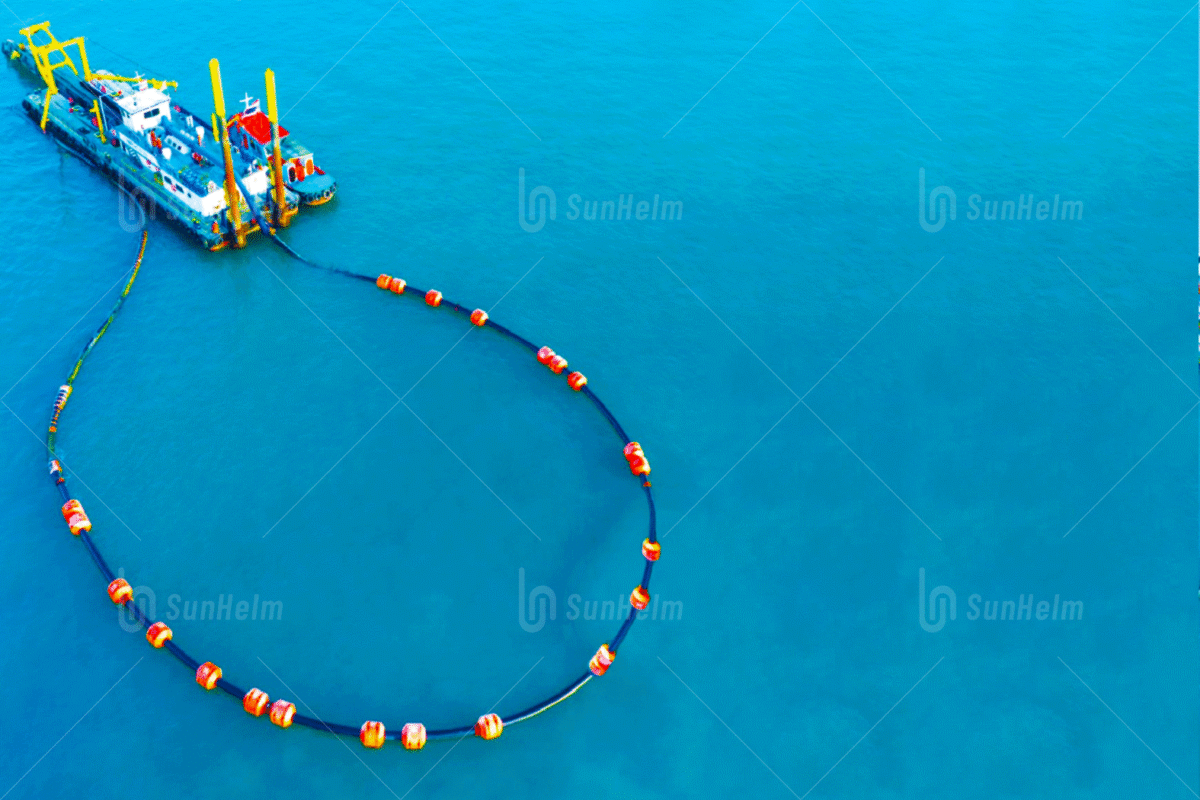
1. What Is Maritime Dredging?
Maritime dredging means removing sand, mud, or stones from the bottom of rivers, harbors, or oceans. The goal is to make the water deeper or to move material for building new areas of land.
Dredging is used for many reasons:
- Keeping shipping channels clear
- Building ports or marinas
- Beach nourishment
- Land reclamation for construction
- Mining sand or gravel
Without dredging, ships could get stuck, harbors would fill with silt, and coastal cities might face more flooding.
2. Main Dredging Methods
Different jobs need different dredging methods. Here are the most common ones:
1. Mechanical dredging – Uses buckets, grabs, or backhoes to dig and lift material. It’s good for hard or compact ground near shore.
2. Hydraulic dredging – Uses pumps to suck up a mix of water and sediment. The slurry then travels through long pipelines. It’s great for moving soft sand or mud.
3. Cutter suction dredging – Uses a rotating cutter head to loosen hard soil before pumping it away.
4. Trailing suction hopper dredging – A ship moves slowly while sucking material into its own storage hopper. It’s used in big offshore projects.
5. Jet or water injection dredging – Uses high-pressure water to lift or move fine sediments.
During hydraulic dredging, the slurry travels through both metal pipes and dredge hoses. These hoses connect pumps and pipes, allowing the mixture to move flexibly even when the sea is rough. A strong dredge hose can handle pressure, bending, and abrasion — making it one of the key parts of any dredging setup.
3. Key Equipment in a Dredging Project
A full dredging system usually includes:
- Dredger vessel or excavator
- Pumps and engines
- Pipelines and dredge hoses
- Valves and joints
- Discharge area or hopper
Among these, dredge hoses play a special role. They connect rigid pipes, reduce vibration, and make installation easier. They also protect pumps and fittings from strong impacts caused by rocks or gravel.
High-quality dredge hoses are made from layers of rubber and fabric reinforcement. Some include steel rings for extra strength. They come in many sizes, from small 200 mm hoses to large 1000 mm hoses used offshore.
If you use the wrong type, hoses may wear out fast or burst under pressure. That’s why many project managers prefer custom-made hoses from professional manufacturers who understand the working environment and flow needs.
4. How to Choose the Right Dredge Hose
Choosing the right dredge hose can make your work smoother and safer. Here are some simple steps:
Step 1: Know your material.
Mud and sand are soft, but gravel or coral are rough and require stronger, more wear-resistant rubber.
Step 2: Check the flow and pressure.
Higher flow and pressure need thicker hose walls and stronger reinforcement.
Step 3: Think about flexibility.
If your setup moves with the tides or waves, pick hoses that can bend easily without cracking.
Step 4: Consider the environment.
Saltwater, UV light, and temperature changes all affect hose life. Choose a hose that can resist seawater and sunlight.
Step 5: Plan for maintenance.
Good hoses last longer, but regular checks are still needed. Compare not only the purchase price but also how often you’ll have to replace them.
If you’re not sure which type fits your project, you can send us your material, flow, and pressure details. Our engineers can help match the right model and estimate its lifetime — free of charge.
5. Installation and Maintenance Tips
Installing a dredge hose may look simple, but small mistakes can cause big problems. Here’s what to keep in mind:
- Support the hose properly to avoid twisting.
- Make sure flanges and bolts are tight but not over-stressed.
- Don’t let the hose rub against sharp edges.
- Check for leaks or bubbles during operation.
- After each shift, rinse the inside with clean water.
If you see bulges, cracks, or worn-out inner layers, replace the hose right away. Keeping a few spare hoses on site is always smart for avoiding downtime.
Our factory provides standard maintenance manuals and spare parts kits to help you keep your system running smoothly.
6. Environmental and Safety Factors
Modern dredging must follow environmental and safety rules.
Operators need to:
- Control how much sediment is released into the water
- Handle and dispose of material properly
- Avoid fuel or oil spills
- Protect marine life near the site
A reliable dredge hose helps here, too. It prevents leaks and reduces the chance of a pipe burst that could pollute the water.
7. Cost and Efficiency
Buying cheap hoses might save money at first, but they wear out faster and can cause longer delays. Every time a hose breaks, you lose working hours and repair costs.
High-quality hoses have stronger wear layers and last longer, cutting total project costs. Many engineers find that upgrading hoses saves 20–30% in maintenance and downtime over a year.
8. Case Study: Port Dredging Project
In one port maintenance job, the contractor used regular rubber hoses and had to replace them every two months because of heavy sand abrasion.
After switching to our reinforced wear-resistant dredge hoses, their hoses lasted more than six months. The project stayed on schedule, and the total hose cost dropped by almost half.
Small changes like this can make a big difference in overall efficiency.
9. Frequently Asked Questions (FAQ)
Q1: How long does a dredge hose last?
It depends on the material and pressure. Usually 6 months to 2 years.
Q2: Can I use the same hose for sand and gravel?
It’s better to use different grades. Gravel needs thicker and tougher rubber.
Q3: How do I know when to replace it?
Check for cracks, soft spots, or leaks after every shift.
Q4: Can I order a custom size?
Yes. We make hoses from 200 mm to 1200 mm, in any length you need.
Q5: What is the delivery time?
Normally 15–25 days, depending on quantity.
Q6: Do you test your hoses?
Yes. Every hose is pressure-tested and inspected before shipping.
10. Final Thoughts
Maritime dredging is an essential part of modern marine construction. It keeps waterways open, builds new coasts, and supports global trade. But a dredging project is only as strong as its weakest part — and hoses are often that part.
Using strong, flexible, and well-made dredge hoses keeps your system working safely and efficiently.
If you’d like help choosing the right hose for your dredging project, contact our team. Share your flow, pressure, and material data — we’ll send you a free hose recommendation and technical sheet.