
How Do You Maintain a Dredging Rubber Hose?
2025-12-11How Should Dredging Hoses Be Maintained?
2025-12-17HDPE pipe is popular in many industries. People use it for water supply, mining, marine works, and even dredging projects. It is light, flexible, and corrosion-resistant.
However, HDPE pipe is not perfect. Like any material, it has disadvantages that engineers and project owners should understand before making a decision.
This article explains the main disadvantages of HDPE pipe in a clear and practical way.
1. HDPE Pipe Has Lower Structural Strength
HDPE pipe is flexible by design. This flexibility helps in some cases, but it also means lower stiffness compared to steel pipes.
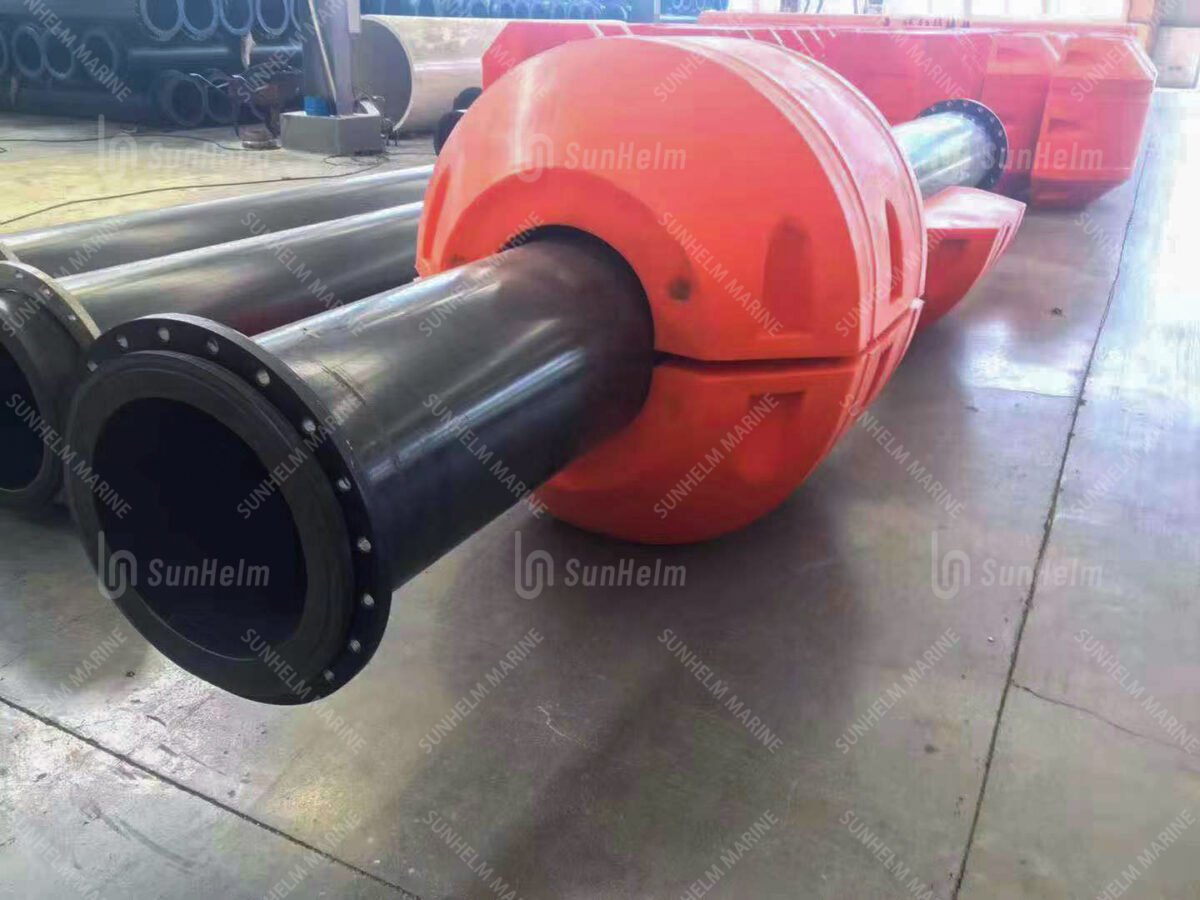
When HDPE pipe faces heavy external loads, it can deform more easily. In dredging projects, long HDPE pipelines often run over water or seabeds. These pipelines may need extra supports, pipe floats, or careful alignment to avoid bending and sagging.
2. HDPE Pipe Is Sensitive to Temperature
HDPE material reacts strongly to temperature changes.
- High temperatures reduce strength
- Thermal expansion is higher than metal pipes
In dredging work, slurry temperature, sunlight, and ambient conditions can cause HDPE pipes to expand or move. If designers do not allow enough expansion space, stress can build up at joints and connections.
3. Mechanical Damage Can Be a Problem
HDPE pipe resists corrosion, but it is not very hard on the surface.
Sharp stones, shells, or debris can scratch or gouge the pipe wall. When HDPE pipe transports sand or gravel slurry during dredging, abrasion becomes a real concern, especially at bends and high-flow areas.
In some cases, extra wall thickness or protective sleeves are required.
4. Installation Quality Is Critical
HDPE pipe joints rely on fusion welding. The pipe itself is strong, but the joint quality depends on the operator.
If welding temperature, pressure, or alignment is wrong, joint failure can happen. In dredging pipelines, joints are often long and continuous. A single poor weld can cause leakage or shutdown of the entire system.
This means skilled labor and strict quality control are necessary.
5. Pressure Capacity Is Limited
Compared to steel pipes, HDPE pipe handles lower pressure at the same diameter.
To reach higher pressure ratings, HDPE pipes need thicker walls. This increases weight, cost, and welding time. In dredging discharge lines that require high pressure to move slurry over long distances, this limitation can affect system design.
6. Long-Term Creep Under Constant Load
HDPE is a plastic material, so it can slowly deform under continuous stress. This behavior is called creep.
Over time, constant internal pressure or external load may cause the pipe to change shape. In long-term dredging installations or permanent pipelines, engineers must include safety factors and proper supports to reduce this risk.
7. UV Exposure Can Affect Performance
HDPE pipe exposed to sunlight for long periods may suffer from UV aging.
Most HDPE pipes include UV stabilizers, but surface aging can still occur over many years. Floating dredging pipelines are often fully exposed to sunlight, so UV resistance becomes an important consideration.
8. Cost Can Increase in Large Dredging Projects
HDPE pipe is often cost-effective for small and medium sizes. However, large-diameter and high-pressure HDPE pipes are expensive.
In dredging projects, costs also include:
- Fusion welding equipment
- Skilled labor
- Pipe floats and accessories
In some cases, steel pipes or rubber dredging hoses may be more economical for specific sections.
Conclusion
HDPE pipe offers many benefits, but it also has clear disadvantages. Lower stiffness, temperature sensitivity, abrasion risk, and installation requirements can affect performance.
In dredging applications, HDPE pipe works well when designers understand these limits and apply proper engineering solutions. Choosing HDPE pipe should always depend on project conditions, not just material popularity.
FAQ
Is HDPE pipe suitable for dredging projects?
Yes. HDPE pipe is widely used in dredging, especially for slurry transport, when designed with proper wall thickness, supports, and joint quality.
What is the biggest disadvantage of HDPE pipe?
Its lower stiffness compared to steel is one of the biggest disadvantages, especially under heavy external loads.
Does HDPE pipe wear out quickly in dredging?
HDPE pipe can suffer abrasion when transporting sand and gravel, but proper design and thicker walls can extend service life.
Can HDPE pipe handle high pressure?
HDPE pipe can handle pressure, but not as much as steel at the same size. High-pressure systems require thicker walls.