
What equipment do you use to dredge?
2025-11-10Where is dredging most commonly used?
2025-11-14Choosing the right dredging hose can make or break your project. A poor choice can lead to frequent downtime, leaks, or hose failure — all of which cost time and money. Whether you’re working on a marine reclamation job, river dredging, or port construction, the right hose keeps your slurry moving smoothly and safely. Let’s look at how to pick the best dredging hose for your project.
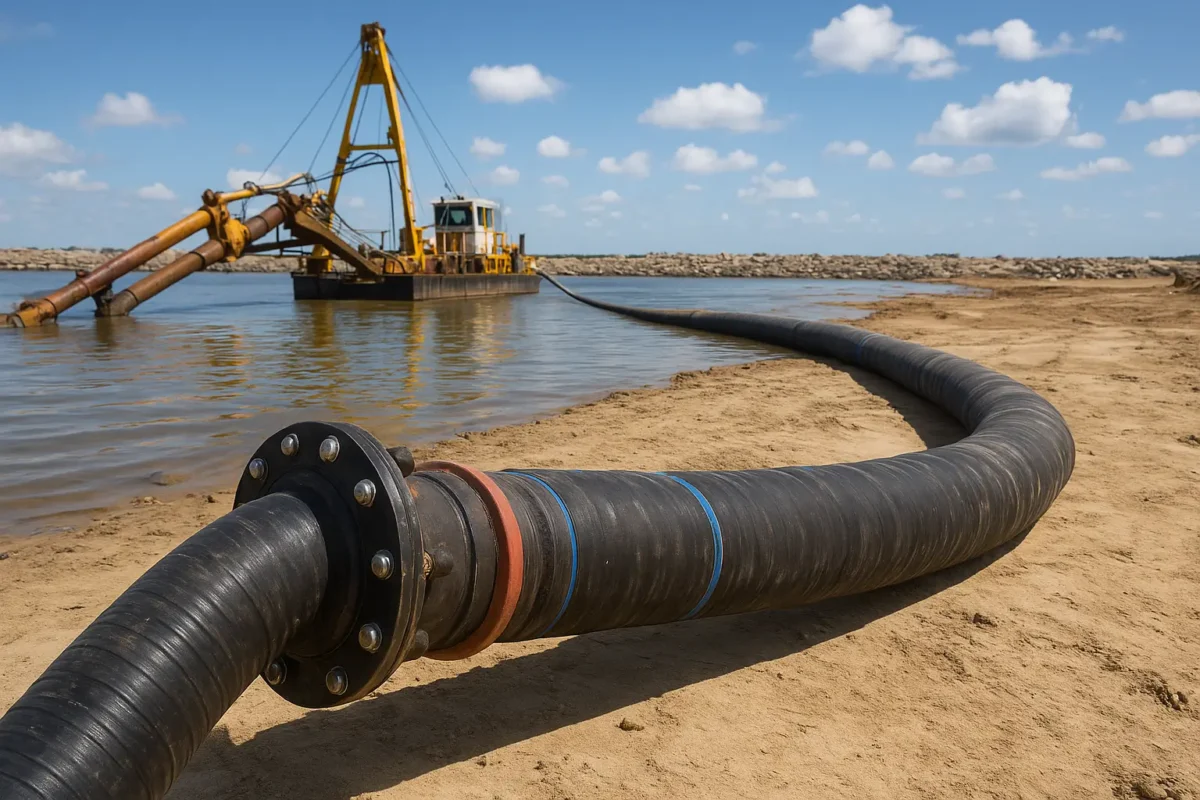
1. Start with What You’re Pumping
The first thing to consider is the type of material.
Fine silt, sand, gravel, or rock — each has a different impact on the hose.
- If you handle highly abrasive materials, choose hoses with extra-thick wear-resistant liners.
- For chemical sludge or acidic slurry, make sure the inner rubber compound is chemical resistant.
- If you deal with coarse gravel, you’ll need a hose with reinforced layers to handle impact and prevent cuts.
In short: the tougher the material, the stronger the hose you need.
2. Think About the Project Location
Your working environment matters a lot.
- Offshore dredging? Go for floating dredge hoses that stay on the surface and resist UV, salt, and waves.
- Cold regions? Choose a hose that stays flexible under freezing temperatures.
- Nearshore or land reclamation projects? Heavy-duty discharge hoses with strong outer covers are better.
Always match your hose’s outer cover to the local environment — it keeps your investment safe and working longer.
3. Know Your Operation Type
Are you using the hose for suction or discharge?
- Suction hoses must handle negative pressure without collapsing. They often have steel wire reinforcement inside.
- Discharge hoses need to handle high pressure and flow, so focus on burst strength and abrasion resistance.
If your dredge runs continuously, look for hoses designed for long working hours and low fatigue.
4. Check the Diameter and Length
Size matters — especially in dredging.
A smaller diameter increases pressure and wear, while an oversized hose can reduce flow efficiency and cost more.
Use your pump capacity and flow rate to calculate the ideal hose ID (inner diameter).
Also, think about the total pipe length. Longer pipelines mean more friction and pressure loss, so you may need a higher working pressure or multiple pumping stages.
5. Choose the Right Construction and Materials
A dredging hose usually has three parts:
- Inner layer – resistant to abrasion and chemicals.
- Reinforcement layer – made with fabric or steel wire for pressure strength.
- Outer cover – protects from UV, cuts, and weather.
If you work with strong suction or sharp particles, go for steel wire-reinforced hoses.
If you need flexibility and lightweight handling, fabric-reinforced hoses are easier to manage.
6. Look at the Flanges and Connections
Compatibility is key.
Make sure your hose flanges match your system (ISO, DIN, or ANSI).
If you need quick installation and frequent movement, consider quick-release couplings or rubber flanges to reduce stress and downtime.
7. Plan for Durability and Maintenance
A good dredging hose should last, but only if you take care of it.
Add external sleeves or ceramic patches on high-wear areas.
Inspect your hoses regularly for cracks, leaks, or soft spots.
Once you see exposed fabric or reduced wall thickness — it’s time to replace it before failure happens.
8. Think Beyond the Price Tag
Cheaper isn’t always better.
A low-cost hose that wears out quickly can double your total cost through replacements and downtime.
Always ask your supplier for:
- Working and burst pressure ratings
- Material specs
- Test reports
- After-sales support
A trusted manufacturer like SunhelmMarine can help you find a hose that fits your project and lasts longer.
9. Quick Checklist Before You Buy
✅ Type of dredging material
✅ Project location (offshore, river, or land)
✅ Suction or discharge function
✅ Flow rate and pump pressure
✅ Hose diameter and total length
✅ Reinforcement type (fabric or steel wire)
✅ Flange standard and connection type
✅ Maintenance plan and lifespan goal
FAQ: Choosing Dredging Hoses
Q1: How do I know which dredging hose size I need?
A: Use your pump’s flow rate and pressure to calculate the correct inner diameter. A hose that’s too small increases wear; too big reduces efficiency.
Q2: What’s the difference between suction and discharge hoses?
A: Suction hoses handle negative pressure and need wire reinforcement, while discharge hoses carry the slurry under high pressure.
Q3: How can I make my dredging hoses last longer?
A: Keep flow steady, avoid sharp bends, inspect often, and protect wear points with sleeves or armor.
Q4: When should I replace a dredging hose?
A: Replace when you see cracks, bulges, exposed reinforcement, or a drop in pressure performance.