
What is a dredging project?
2025-10-31What is maritime dredging?
2025-11-06When it comes to land reclamation projects, dredging is the heart of the work. The right dredge can decide how fast, safe, and cost-effective your project will be.
There are three main types of dredges used around the world — Cutter Suction Dredgers (CSDs), Trailing Suction Hopper Dredgers (TSHDs), and Grab Dredgers.
Each type works differently, and each fits a specific job. And no matter which you use, one thing always connects them all — the dredging hose. This hose plays a key role in moving sand, mud, and water from the seabed to where it’s needed.
Let’s look closer at these dredgers and see how they work, where they’re best used, and why a strong dredging hose is so important.
Why Choosing the Right Dredge Matters
In land reclamation, every project is a race against time and tide. The type of soil, the distance to pump the material, and even the weather can change what kind of dredge works best.
A good dredge will move materials efficiently and safely, while a poor choice can cause costly delays and downtime.
That’s why engineers and construction managers must understand the strengths and limits of each dredge — and pick the best setup for the site.

The Three Main Types of Dredges
There are three major dredge types used in land reclamation and harbor works:
| Dredge Type | Best For | Soil Type | Key Feature |
|---|---|---|---|
| Cutter Suction Dredger (CSD) | Nearshore, precise work | Clay, compact sand | Fixed position, cutter head cuts soil |
| Trailing Suction Hopper Dredger (TSHD) | Long-distance transport | Sand, silt | Self-propelled ship with hopper tank |
| Grab Dredger | Small areas, debris removal | Rock, mixed soil | Grab bucket lifts material directly |
Now let’s dive deeper into how each one works.
1. Cutter Suction Dredger (CSD)
A Cutter Suction Dredger uses a rotating cutter head to loosen compact soil or clay. The soil is then mixed with water to form slurry, which is pumped through a suction pipe and sent through a dredging hose to the shore or a reclamation site.
How It Works
The cutter head spins and cuts the seabed material. A powerful dredge pump sucks up the slurry and sends it through the pipeline — often several hundred meters long — to the fill area.
Main Advantages
- Works well with hard or compact materials like clay.
- Offers precise dredging depth and shape.
- Can work continuously if set up properly.
- Suitable for nearshore or controlled areas.
Limitations
- Needs a strong anchoring or spud system to stay in place.
- Less mobile than other dredge types.
- Not ideal for large stones or very coarse sand.
Role of Dredging Hose
In a CSD, the dredging hose connects the floating pipeline to the shore or to another pump station.
It must handle high pressure, strong flow, and abrasive materials. The inside of the hose is often lined with wear-resistant rubber to prevent leaks or burst damage.
If the hose fails, the whole pumping system stops — so quality really matters.
2. Trailing Suction Hopper Dredger (TSHD)
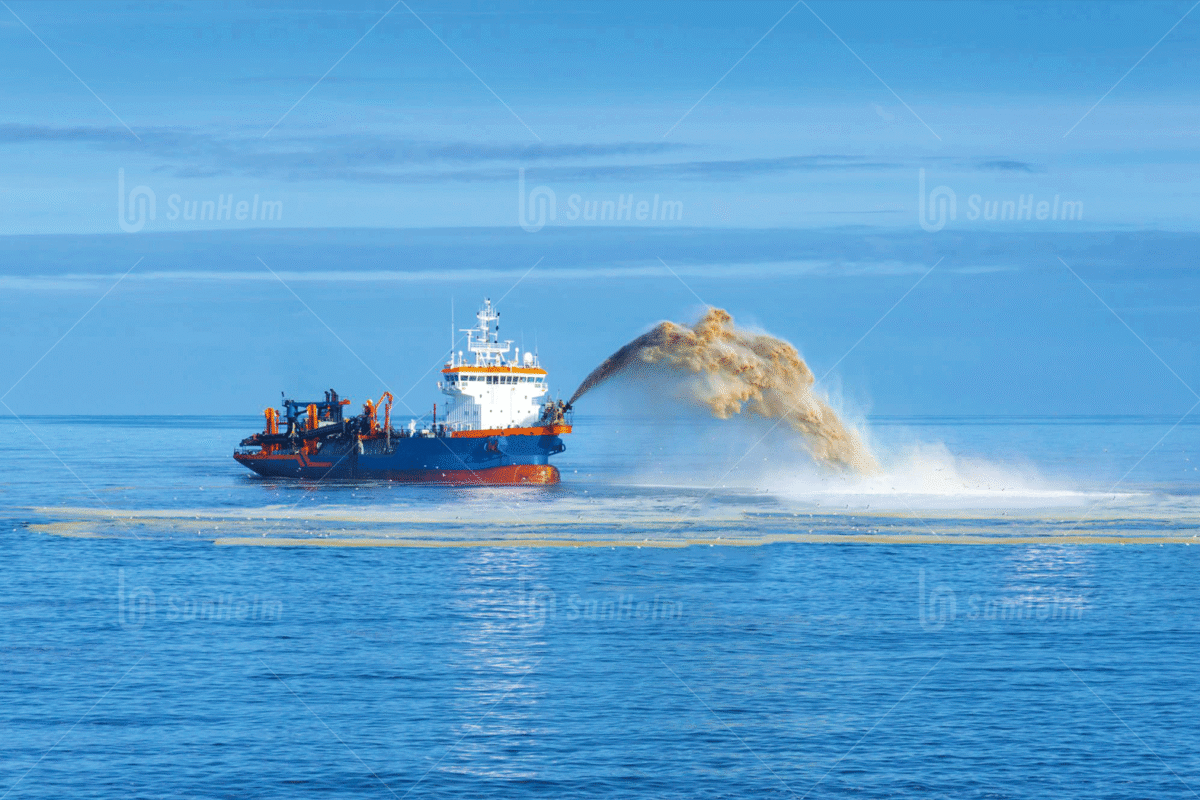
A Trailing Suction Hopper Dredger looks like a large ship. It moves while sucking up sand and silt from the seabed using long suction pipes on both sides.
The material is stored in a big onboard tank called a hopper.
How It Works
As the ship sails slowly, it drags the suction pipes along the seabed. Pumps pull up sand and water into the hopper. Once full, the ship sails to a reclamation area or dump site and releases the material — either by opening bottom doors or by pumping it through dredging hoses onto land.
Main Advantages
- Perfect for long-distance dredging and transport.
- Can operate in deep water.
- Works efficiently on large volumes of sand.
- Can continue operations in moderate sea conditions.
Limitations
- Not as precise as a stationary cutter suction dredger.
- Less effective on sticky clay or rock.
- High fuel consumption.
Role of Dredging Hose
When the TSHD pumps the slurry ashore, it uses a floating dredging hose system.
These hoses float on the sea surface and connect the ship to a booster station or shore pipeline. The hose must be flexible, buoyant, and very wear-resistant because it carries high-speed sand and water.
Good hose performance means less downtime and smoother pumping.
3. Grab Dredger
A Grab Dredger works like a giant mechanical claw. It uses a crane or wire system to lower a grab bucket to the seabed. The bucket grabs soil or debris and lifts it onto a barge or nearby area.
How It Works
The operator opens the grab, drops it into the soil, then closes it to pick up the material. Once full, it’s hoisted up and emptied into a barge or onshore area.
Main Advantages
- Great for removing debris, rocks, or old structures.
- Useful in narrow or hard-to-reach areas.
- Simple setup, fast mobilization.
- Can handle different soil types in small zones.
Limitations
- Lower production rate than suction dredgers.
- Hard to control precision depth.
- Not suitable for long-distance pumping.
Role of Dredging Hose
Grab dredgers mostly handle solid materials directly. But when the removed material needs to be mixed with water and pumped as slurry, short dredging hoses can connect the grab system to shore pumps.
In these cases, the hose helps transfer the material safely without spills or blockages.
The Importance of the Dredging Hose
The dredging hose is one of the most critical parts of any dredging system. It carries a mixture of sand, mud, gravel, and water from the dredge to its destination.
If the hose fails, the whole operation stops. That’s why construction companies pay special attention to hose design and maintenance.
Main Features of a Quality Dredging Hose
- Strong Inner Lining – Made from high-grade wear-resistant rubber or composite material.
- Correct Diameter – Must match the pump capacity to avoid pressure loss.
- High Pressure Rating – Should handle both working and surge pressure.
- Flexible and Durable – Must bend easily without collapsing.
- Good Couplings – Quick-connect flanges or metal rings ensure tight seals.
- Buoyancy Options – Some hoses float on water with foam layers or float collars.
For Land Reclamation Projects
- For long-distance pumping, choose heavy-duty hoses with thick walls and high abrasion resistance.
- For short or temporary setups, flexible and lightweight hoses make installation faster.
- For coarse materials like gravel, pick hoses with reinforced inner layers and anti-puncture design.
Maintenance Tips
- Inspect inner walls for wear after every project phase.
- Replace hoses showing thinning or cracking.
- Use spare hoses for emergency replacements.
- Avoid sharp bends and excessive dragging on rough ground.
A reliable dredging hose ensures your dredge keeps running — and your project stays on schedule.
How to Choose the Right Dredge for Your Project
Here’s a quick guide for choosing the best dredge setup for land reclamation:
| Project Type | Recommended Dredge | Dredging Hose Setup |
|---|---|---|
| Nearshore land filling, precise contour shaping | Cutter Suction Dredger | High-pressure wear-resistant hose system |
| Long-distance sand transport, offshore reclamation | Trailing Suction Hopper Dredger | Floating hoses + booster pump connection |
| Obstacle clearing, small repair zones | Grab Dredger | Short transfer hoses for slurry or support pumps |
When planning your dredging project, always consider:
- Soil type (sand, clay, rock)
- Pumping distance
- Water depth
- Available power
- Timeline and budget
Choosing the right dredge and the right dredging hose together will save fuel, reduce downtime, and make operations safer.
Procurement and Operation Tips
When purchasing dredging equipment, make sure your contract includes:
- Performance guarantees for production rate and wear life.
- Hose warranty covering abrasion and pressure failure.
- Training and after-sales support for your on-site crew.
- Replacement parts plan, especially for hoses and couplings.
- Environmental protection measures, such as anti-spill valves or quick repair kits.
During operation:
- Keep the pipeline as straight as possible to reduce energy loss.
- Monitor pressure and flow rate to avoid overloading hoses.
- Schedule preventive maintenance instead of waiting for breakdowns.
Environmental and Safety Notes
Land reclamation can impact marine ecosystems. Leaking hoses or pipe bursts can release mud or pollutants into the water.
To minimize risk:
- Inspect hoses regularly for cracks or loose joints.
- Use floating hose systems with secure clamps.
- Train workers in emergency shutdown and repair procedures.
- Keep spill control tools ready on site.
A small check every day can prevent big accidents later.
Conclusion
Every dredging project is unique, but success always depends on two things: the right dredge and a dependable dredging hose system.
- Cutter Suction Dredgers bring precision and power close to shore.
- Trailing Suction Hopper Dredgers move huge volumes across long distances.
- Grab Dredgers add flexibility for cleanup and tricky zones.
And throughout all these systems, dredging hoses are the lifelines — carrying the slurry that builds new land and new opportunities.
If you’re planning a land reclamation or dredging project, choose quality hoses and well-matched equipment. A strong, efficient dredging setup means shorter timelines, lower costs, and safer operations.